
Team Building—Company Case Study
A newly formed leadership team at a global company, spread across countries and time zones, gathered for several days of planning and strategy. Their leader knew that diving right into their agenda wasn’t the right first step. They needed to build relationships before they could build their business. Their investment in a team-building workshop focused on meaning and purpose paid dividends in trust and understanding.
Seeing Through One Another’s Lenses
Like many senior leadership teams in a global corporation these days, this one doesn’t share office space. While members of the newly formed team had met in person on other occasions, most of their meetings are virtual. Their laptop cameras and screens limit what they can see and understand about the people they work with. And the calendars they keep leave little room for small talk.
Maybe this sounds familiar.
Their leader knew the team needed to build trust and understanding as they went into several days of meetings. They turned to Reframe & Develop for help accelerating team connection, encouraging empathy, and building trust. We co-designed a team building workshop focused on where they find meaning—their why, if you will.
Ahead of the session, the group of fifteen executives snapped, selected, and sent more than eighty photos, all in response to a prompt about where they find meaning and purpose, both at work and beyond it. Looking through their pictures before the workshop, one thing was hard to miss. Everyone had at least one or more photos of a person: a spouse, a child, a friend, a mentor, a coworker. Whatever these leaders were building toward professionally, meaning and purpose intersected with the people in their lives.
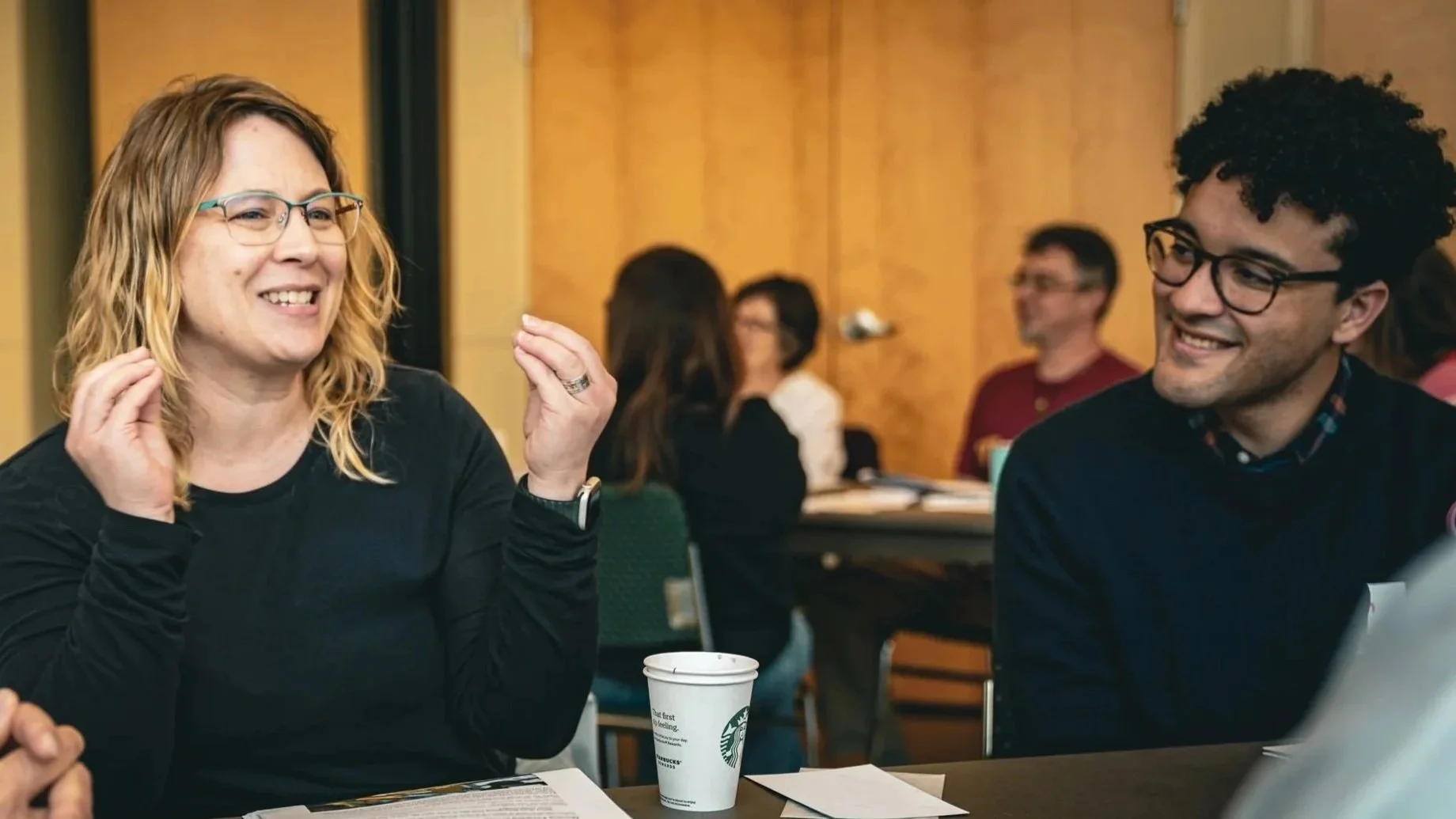
The team building workshop opened with a reflection on a photo and a poem. After a briefing on the visual storytelling process, they shared their photos and the stories behind them in story circles, carefully constructed small groups of five people. Next, the entire team spent time processing their experience. They identified what they hold in common, what they felt as they shared and listened, what they learned, and what they hoped they could carry forward from the workshop.
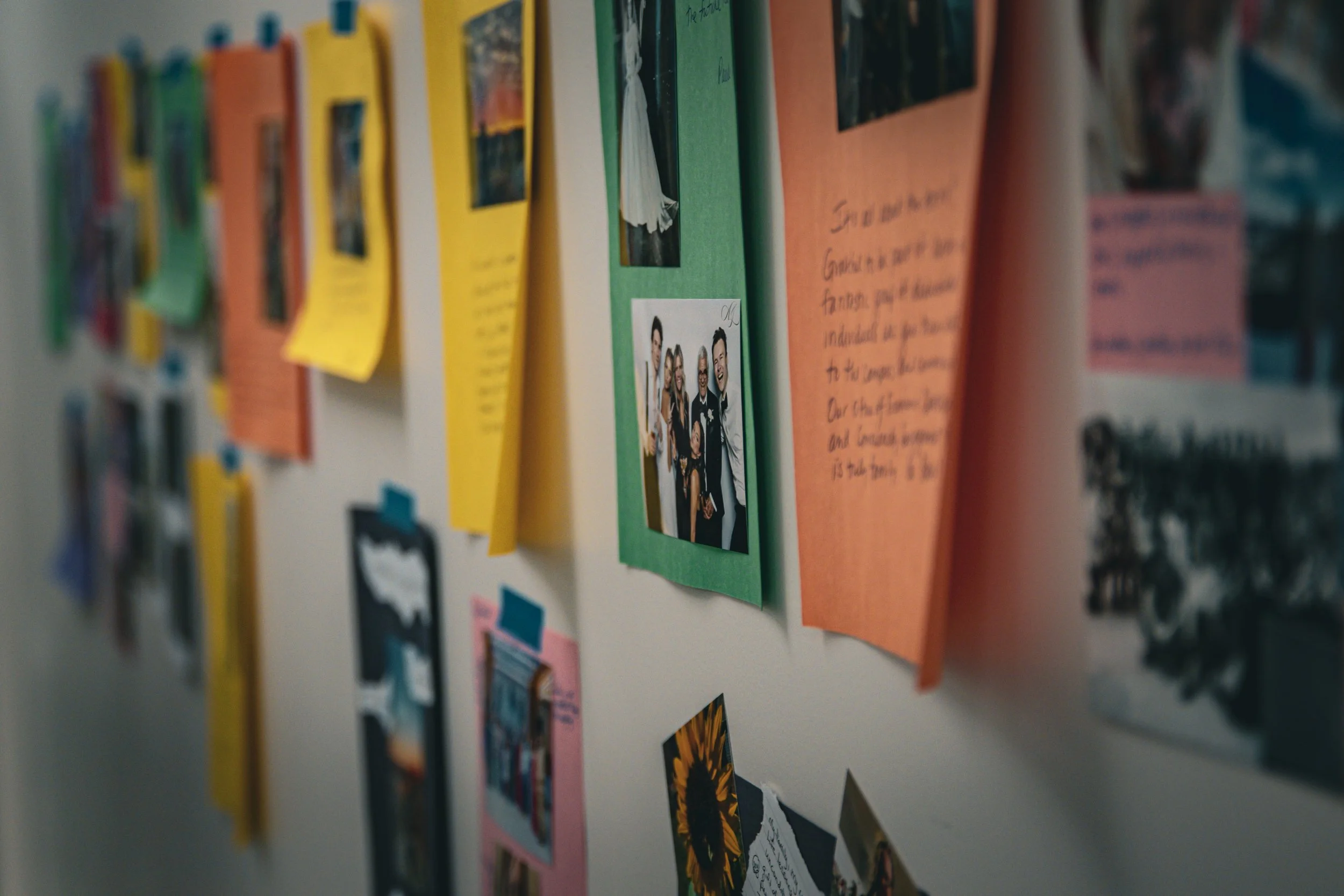
To preserve their experience, they turned their photos and stories into a collaborative gallery. Their artwork and captions went up on the conference room wall with painter’s tape. And it remained there for the rest of the week, a quiet presence in the room while the team moved on to the work of ideating, planning, and strategizing. This makeshift artwork served as a reminder of the meaningful connections they shared every time someone looked up from the conference room table. When the week finally closed, everyone took their own photo and reflection with them as a memento.
“We could have spent a full day hearing each other’s stories.”
One sentiment echoed across their post-workshop feedback: they wish they could have spent an entire day sharing stories, asking questions of genuine curiosity, and deepening relationships. Left to the usual offsite formula, a gathering like this produces exactly what it's meant to avoid: a day that feels good in the room and is gone the next day. But starting with visual storytelling leads somewhere different. Knowing each other more deeply isn't a warm-up before the real work—it's the investment that makes the real work possible.
Beyond the Frame
Research on workplace collaboration points to the benefits of opening a work conversation with something other than the business at hand. When co-workers make space for the parts of life that don’t usually make it into a meeting—like the people and places that give life meaning and purpose—they use more supportive language and are more likely to stay connected with their colleague(s) over time (Sean Martin et al., “Talking Shop,” 2022). It turns out that small talk can have a big payoff. It’s not a detour from the “real work,” it’s an avenue into work that’s collaborative, meaningful, and human.
Ready to see what this could look like for your team?
Build a workplace culture where teams trust one another more deeply, employees communicate with greater understanding, and everyone collaborates more effectively across differences—that's a culture built through intention, not by accident.